| Digital Systems Engineering
(1998)
|
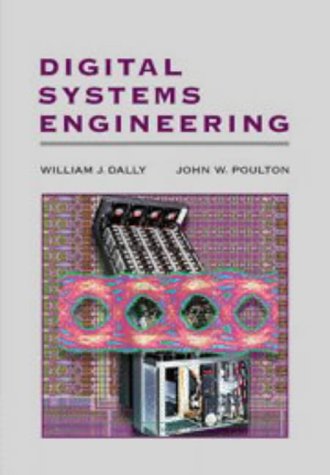
| Front Cover |
Book Details |
|
| Author |
| William J Dally |
| John W Poulton |
|
| Genre |
Digital Design |
| Publication Date |
1998 |
| Format |
Hardcover (260
x
mm)
|
| Publisher |
Cambridge University Press
|
| Language |
English |
|
|
| Plot |
Book Description
What makes some computers slow? What makes some digital systems operate reliably for years while others fail mysteriously every few hours? Why do some systems dissipate kilowatts while others operate off batteries? These questions of speed, reliability, and power are all determined by the system-level electrical design of a digital system. Digital Systems Engineering presents a comprehensive treatment of these topics. It combines a rigorous development of the fundamental principles in each area with down-to-earth examples of circuits and methods that work in practice. The book not only can serve as an undergraduate textbook, filling the gap between circuit design and logic design, but also can help practicing digital designers keep up with the speed and power of modern integrated circuits. The techniques described in this book, which were once used only in supercomputers, are now essential to the correct and efficient operation of any type of digital system.
Book Info
Presents a comprehensive treatment of Digital systems combining a rigorous development of the fundamental principles in each area with real world examples of circuits & methods for the undergraduate & practicing digital designer alike. DLC: Electronic digital computers - Design & construction.
Card catalog description
What makes some computers fast and others slow? What makes some digital systems operate reliably for years while others fail mysteriously every few hours? Why do some systems dissipate kilowatts whereas others operate from batteries? The answers to these questions of speed, reliability, and power are all determined by the system-level electrical design of a digital system: issues of power distribution, noise management, signaling, timing, and synchronization. Digital Systems Engineering presents a comprehensive treatment of these topics. It combines a rigorous development of the fundamental principles in each area with down-to-earth examples of circuits and methods that work in practice. The book not only can serve as an undergraduate textbook, filling the gap between circuit and logic design, but also can help practicing digital designers keep up with the speed and power of modern integrated circuits. The techniques described in this book, which were once used only in supercomputers, are now essential to the correct and efficient operation of any type of digital system.
|
| Personal Details |
| Collection Status |
Not In Collection |
| Store |
Amazon.com |
| Location |
trabalho |
| Purchase Price |
$65.00 |
| Purchase Date |
3/6/02 |
| Condition |
Very Fine |
| Index |
405 |
| Owner |
Paulo Mendes |
| Read It |
No |
| Reading Date |
January 2002 |
| Links |
URL
|
| Collection # |
90016 |
| Order # |
103-9560819-0441468 |
|
| Product Details |
| LoC Classification |
TK7888.3 .D2934 1998 |
| Dewey |
621.39 21 |
| ISBN |
0521592925 |
| Edition |
01 |
| Printing |
4 |
| Paper Type |
alkaline |
| Country |
USA |
| Cover Price |
$65.00 |
| Nr of Pages |
663 |
| First Edition |
Yes |
| Rare |
No |
|
| Notes |
| Includes bibliographical references (p. [643]-651) and index. |
|